Remember how she looked the day you met?
Shiny, glossy, new. And that smell!
We are talking of course about the day you met your new car. And how everything from that new car smell inside to its glossy, shiny exterior got your pulse racing and your heart smiling. Now it can be hard maintaining that new car feel. But with modern paint protection technology, it IS possible to keep the gloss going long after the car rolls out the showroom. And of course keeping your car in good shape is always a good investment. In fact, one of the top identifiers of a car’s valuation during its lifetime is its paint condition.
So what are options in the market to protect your car’s paint? And how do you pick the right one? Should you start safe and choose a classic ceramic coating or go for the revolutionary Graphene ceramic coating? Does it get better than Paint Protection Film (PPF) and how long does it last? All these questions and more answered by the detailing experts at CarzSpa Detailing Studios!
- Why your car needs paint protection
- Types of car paint protection products
- Comparison between Ceramic Coatings, Graphene Ceramic Coating & PPF
- Paint protection with CarzSpa
- Verdict
Why your car needs paint protection
Everyday you take your car on the road exposes its surface to natural elements like UV rays, rain and bird droppings to pollutants like smoke, dirt and tar from the road, all of which can cause physical and chemical harm. Oxidation, dents, abrasions, scratches – all ways to kill the natural shine of your car.

The car’s paint is not enough to fight all these elements alone. Enter paint protection products like ceramic coating and PPF, which create a layer, almost like a second skin, on top of your car paint to protect it from all the natural and industrial aggressors that attack paint. And of course there is science behind it. Ceramic coating, Graphene and PPF each protects on the car paint based on a different scientific technique. More on this follows…
Types of Paint Protection Products
Ceramic Coating
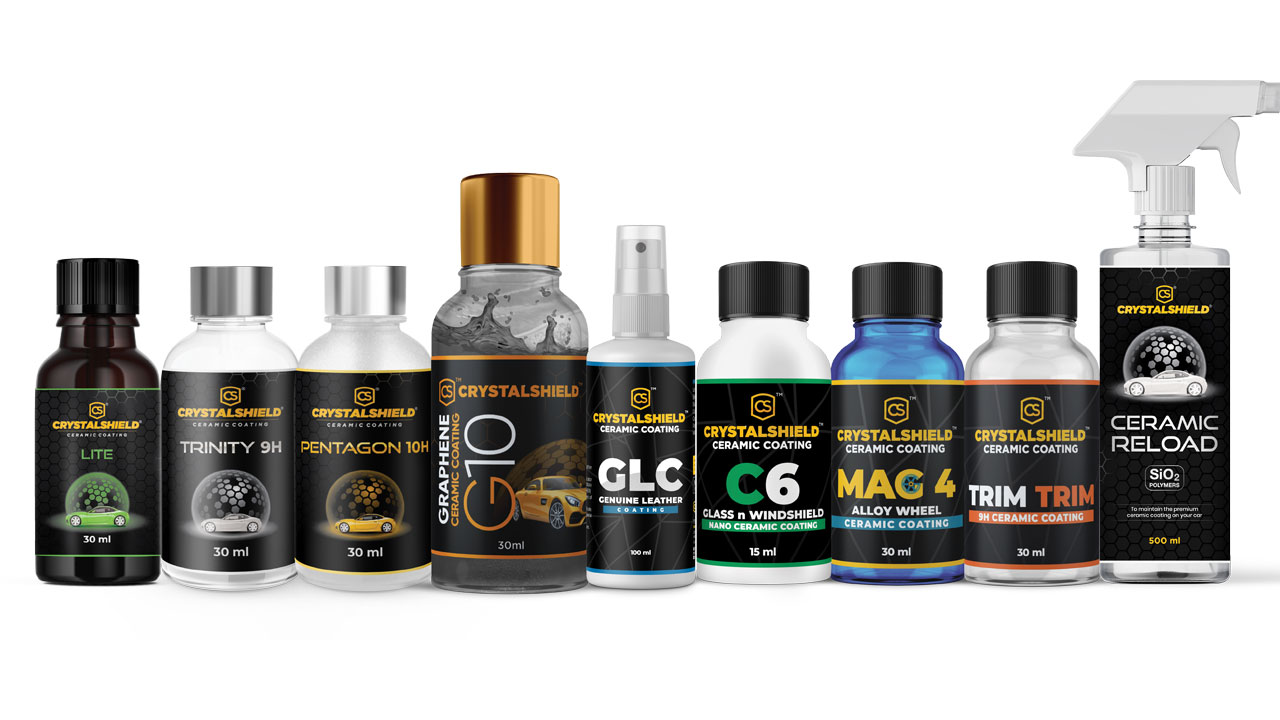
Ceramic Coating for cars is a liquid polymer, which on applying to your car’s exterior, bonds with its factory paint and forms a semi-permanent layer of protection over it. Ceramic Coatings are formulated from the same raw material used in glass and ceramics – i.e. Silicon Dioxide or SiO2.
Graphene Coating
Graphene Coating for cars, is created with the addition of graphene to traditional ceramic coatings, creating a lightweight and yet strong coating, which repels dust, in addition to water. This is considered to be a breakthrough in vehicle coating technology.
Paint Protection Films
A paint protection film, or PPF, is a thermoplastic polyurethane (TPU) film that shields your car’s paint, defending it against environmental debris, scratches, rock chips and other abrasives. It is transparent, malleable and self-healing making it an advanced choice for protecting your car’s paint while retaining its showroom shine.
Ceramic Coatings vs Graphene Ceramic Coating vs PPF
Protection
Ceramic coatings are hydrophobic. This means they are water-repellant which makes it hard for dirt and dust to stick to it. Since the coating doesn’t really get dirty, it’s easier to clean too! Ceramic coatings also protect the paint from oxidation caused by UV-rays, almost like a sunscreen for your car.
Thanks to graphene’s anti-static properties, graphene ceramic coatings are dust-repelling, as well as, water-repelling. Basically, it won’t allow dust or any other flyaway particles to settle down on the surface of the car. In addition, graphene’s low heat retention property ensures that water does not evaporate on the paint, instead forming water beads that can slide off easily. Graphene’s honeycomb molecular structure imparts a high contact angle to water, making it easy for water to slide down the paint. This reduces the chance of water spots forming on paint.
Continue reading Graphene Ceramic Coating vs PPF – The Winner is?


No comments:
Post a Comment